South Yorkshire: county 7
Relating this whole mad Bach undertaking to the rest of life is a tricky business. I love having a week of Bach immersion – getting lost in this brilliant world and thinking of no other music. But I also love the inspirations and fresh perspectives that I get from other types of work in between. And obviously other work is essential: whilst I take a small fee for the Bach performances, it’s not enough to live off, and the need to earn consistently after a year of decimated income is considerable!
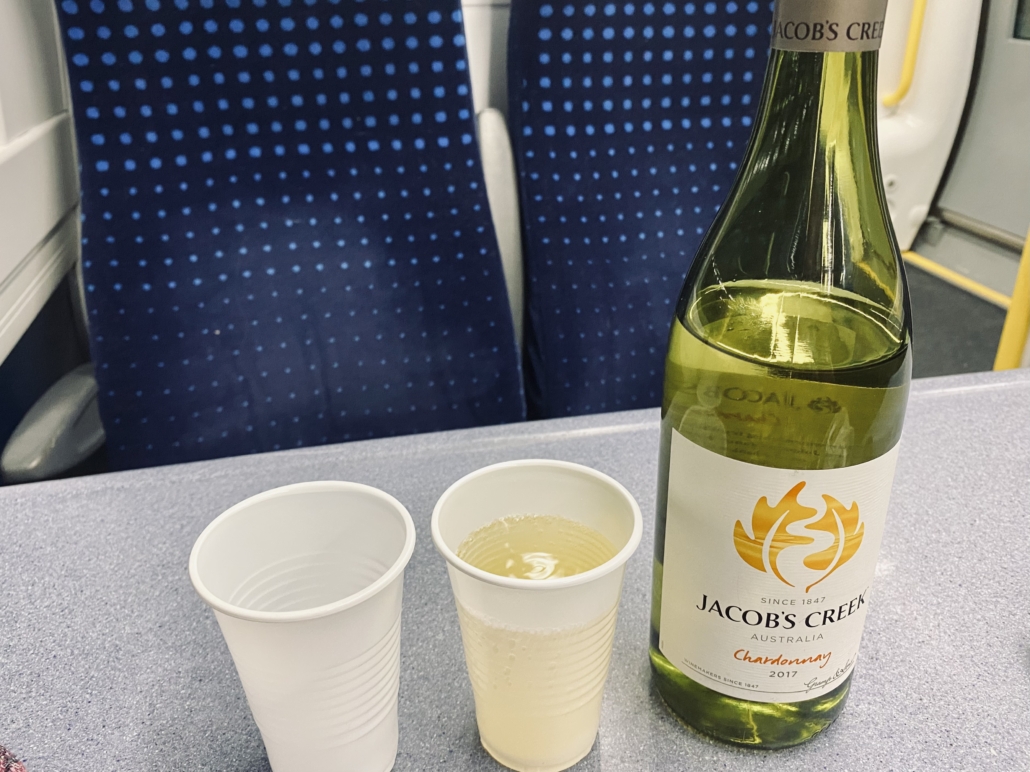
For the Sheffield performance, the fact that I was coming straight from a few days of unrelated work in Dorset was both brilliant and challenging. Brilliant because my head was full of the ideas I’d absorbed from the wonderful cellists I’d been working with, which fed in all sorts of indirect ways into the Bach. Challenging, because I finished in Dorset at 5pm on Thursday and was practising in Sheffield at 9am for the day’s four concerts, hours of slow trains and not quite enough sleep behind me.
The fantastic Music in the Round were hosting the South Yorkshire performance: I’d been put in touch with them through a mutual friend (thank you Gemma!) and they’ve been brilliant from the outset. Some organisations just seem to emanate positive vibes, and this is one of them. They do great work presenting top quality chamber music, have an approachable and engaging ethos, and seem uniformly comfortable in their own skin, which makes collaborating with them a dream.
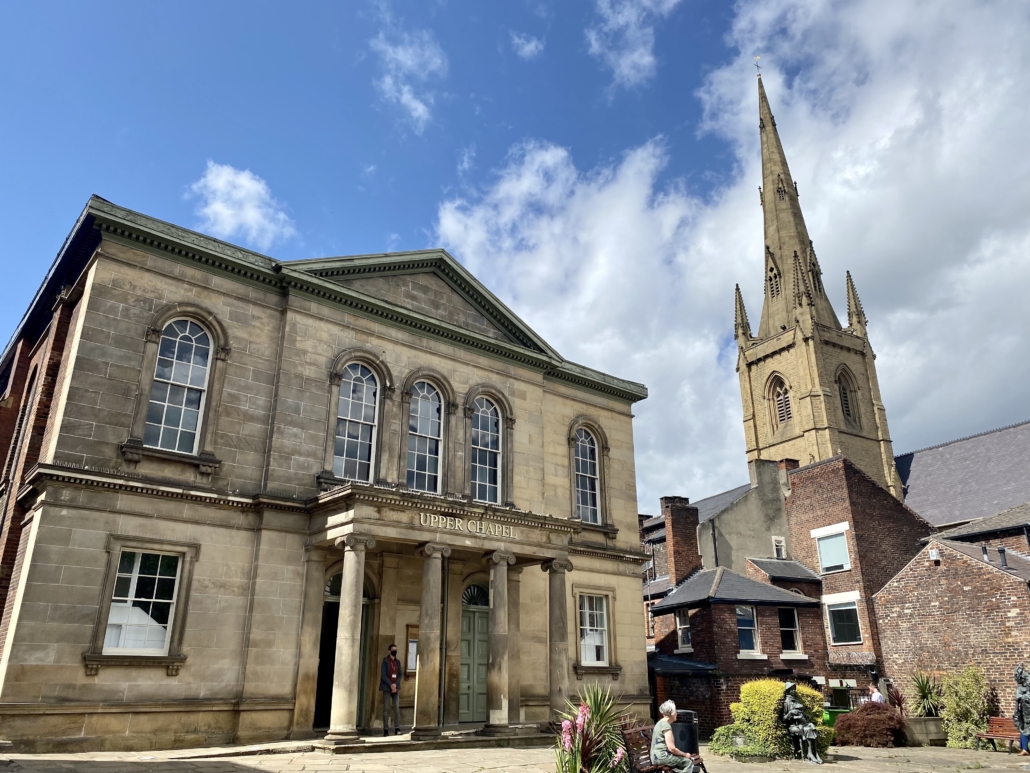
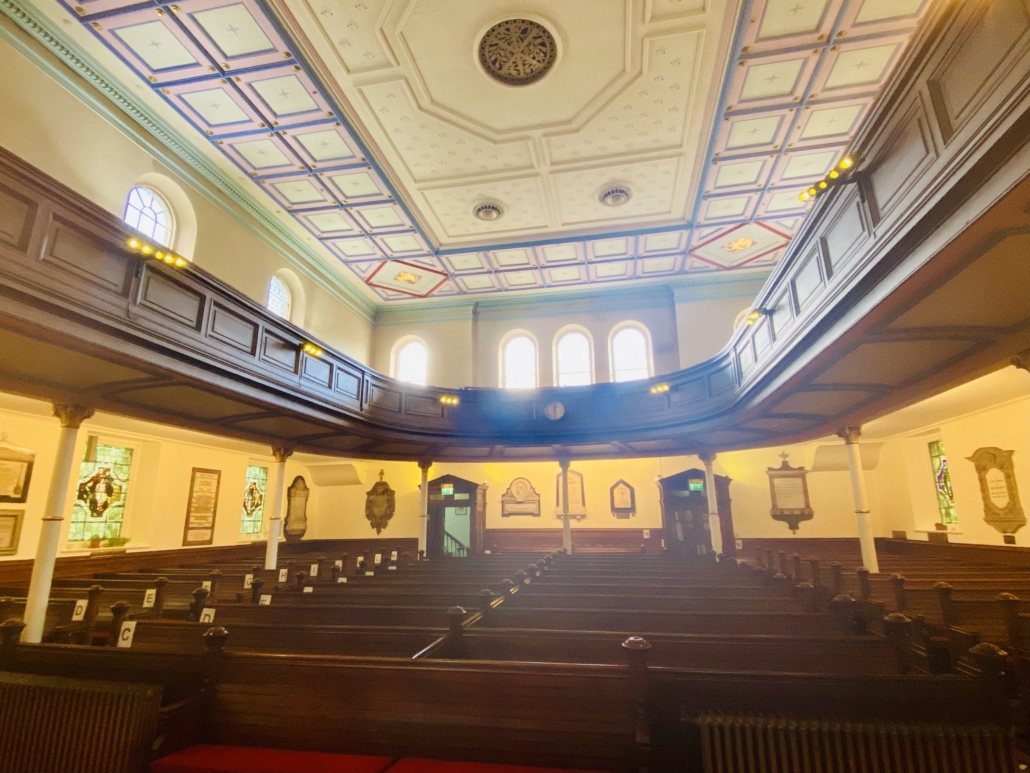
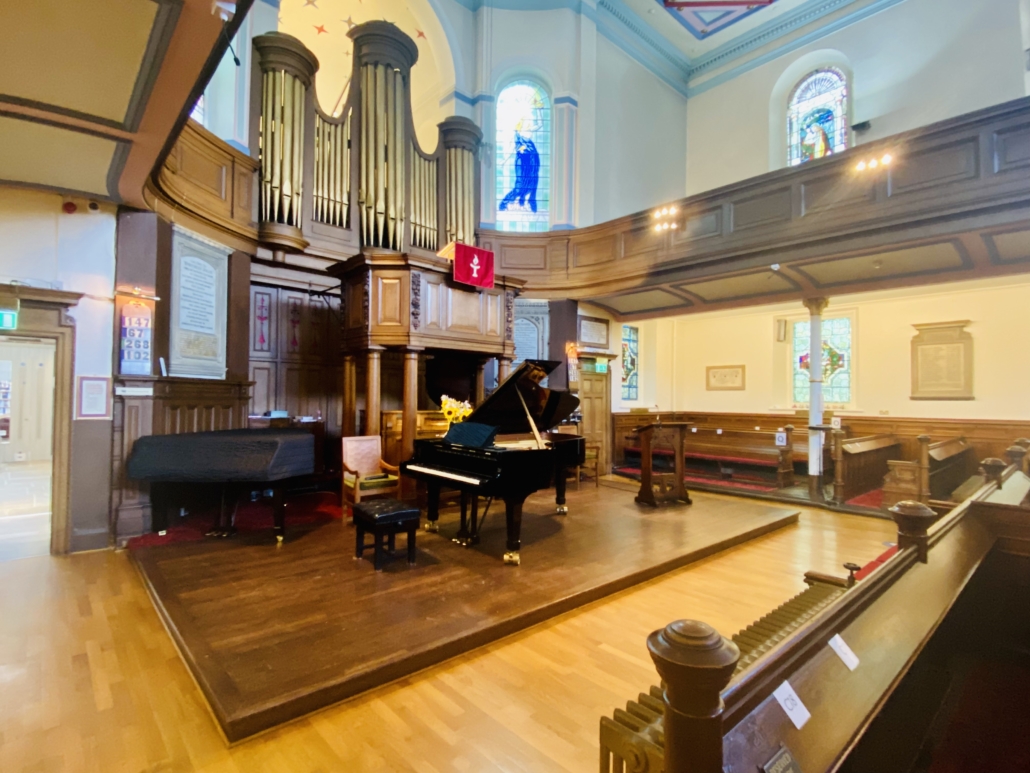
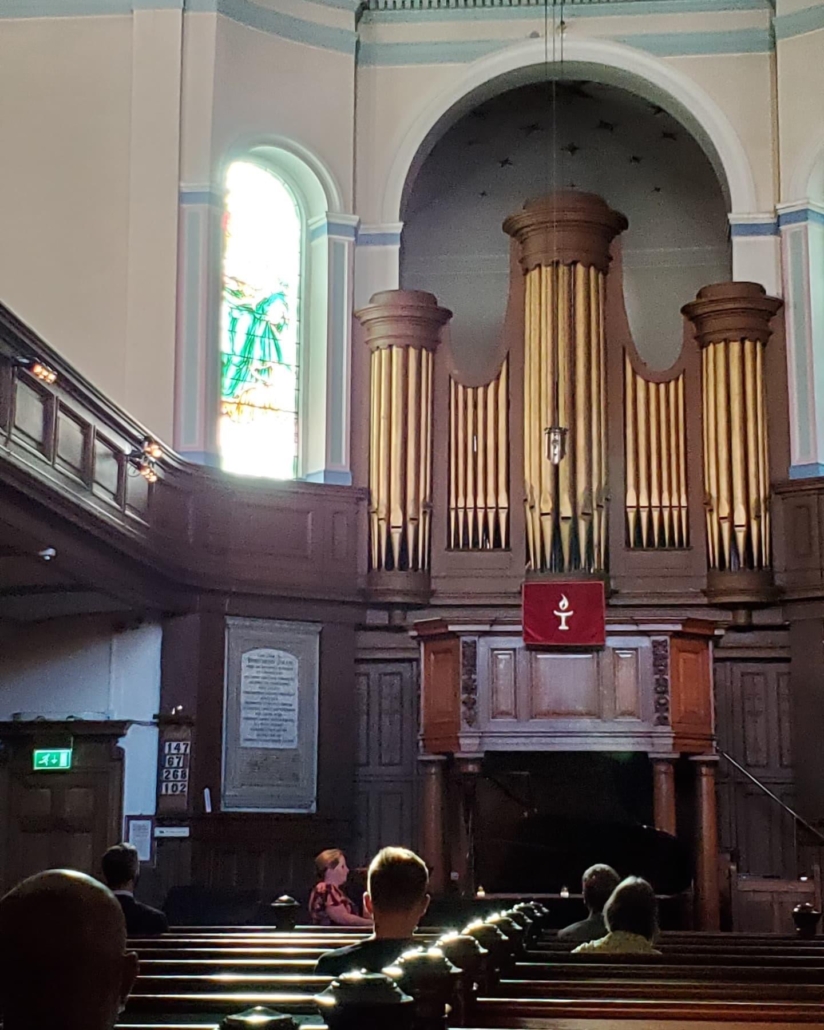
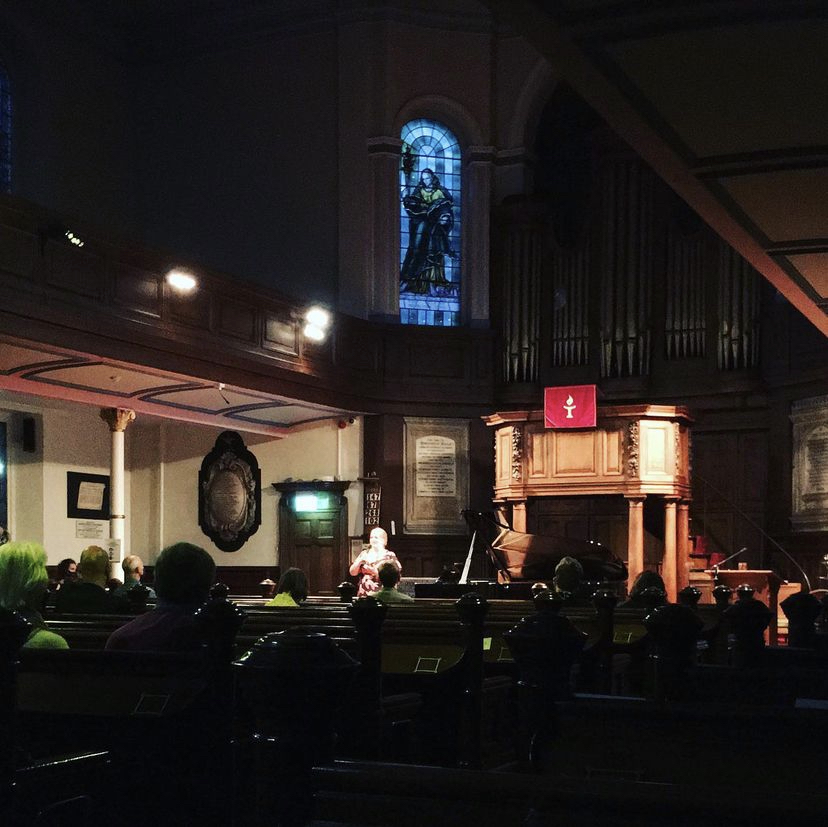
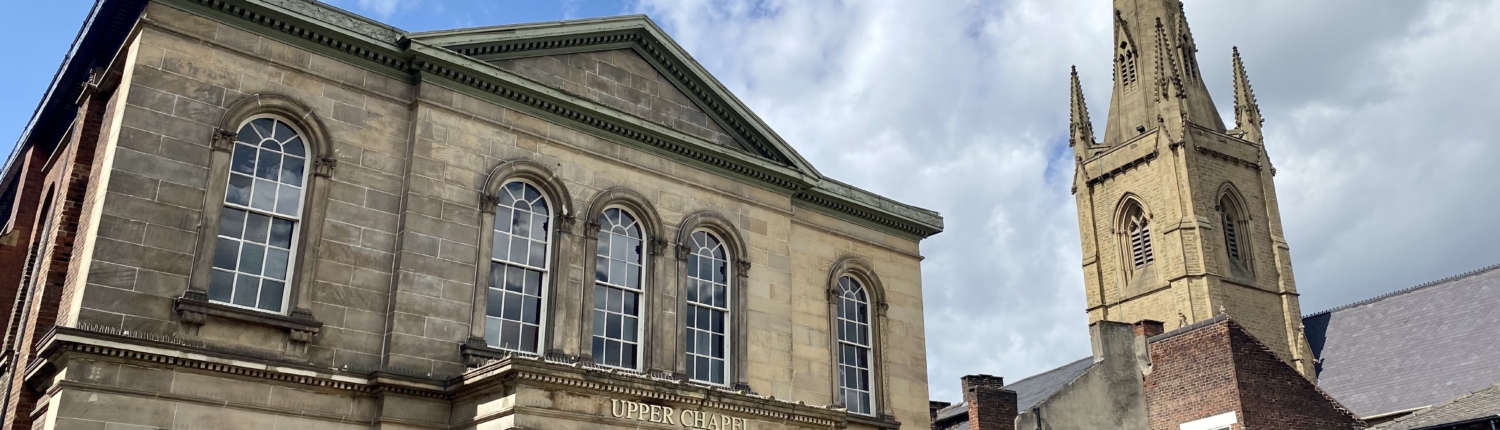
Much of their programme in normal times takes place in the Crucible Studio, but since restarting live performances they’ve been based in another of their venues, the Upper Chapel. This 18th-century unitarian chapel has a great sense of space – width, height, light – its dark wooden pews offset by the painted ceiling and many windows. I arrived as the piano technician left, the Steinway C ready and waiting for me.
Some mornings it takes longer for brain and fingers to get going than others, and this was definitely a slow one. There comes a point about twenty minutes into a warm-up session where, if things still aren’t clicking into place, it’s easy to panic. Actually, they (generally) always get there. I just have to trust it’s a slower process on some days. But it can be unnerving!
This was the first performance of the project where I was playing the whole 48 in one day. I was splitting the music across four concerts, each an hour and a bit – 11am, 2pm, 5:30pm, 8pm (with an audience Q&A between the last two). Knowing there was such a long day ahead, I decided only ever to think about the programme immediately coming up, in some sort of deliberate denial about the remaining concerts: there’s only so much you can really focus on at once. Having enjoyed the groupings I played in Suffolk a few days earlier, and having had positive audience feedback about that format, I elected to use the same pattern: each concert had three ‘sets’, each set containing four Preludes and Fugues, taking one note per set (e.g. F major Bk 1, F minor Bk 2, F major Bk 1, F minor Bk 2 in one set – as I do in my monthly livestreams). This meant I could introduce each group, looking at the different colours Bach finds in each key, and it also gave a structure to each performance, which can be quite helpful for the listener (and player!).
Like many performers, I usually get nervous to some degree – edgy anticipation, a sense of being slightly less settled, some tension. Over time this becomes such a familiar process that dealing with it becomes second nature – you almost learn to make friends with the nerves, ideally channeling that energy to aid the performance, or at least knowing mentally and physically what you need to do not to let it get in the way. But about twenty minutes before going on stage for the first concert here, I got real, proper nerves: I don’t want to do this, I want to go home, I don’t think I can do this. Some performers have this every time they go on stage, and I honestly don’t know how they do it. It’s horrible. I don’t even really know where it came from this time – I’m lucky that I never normally have anything like this anxiety about performing – but I knew I had to fix it fast. Music has historically been a long way behind sports in terms of performance psychology, but this has changed massively in the last couple of decades. It’s something I explore a lot in coaching and teaching, and read quite widely about (not just performance anxiety, but imagination in performance, how music and the brain interact, etc etc – it’s a deeply interesting field). So I asked myself what I would tell someone else to do in this situation. I am no professional on this topic but these are tricks I’ve accumulated over time. First up, name the things that are bothering you – specifically. Naming them gets them out of swilling around in your head. I don’t feel prepared enough on this phrase. I don’t think I had enough breakfast. I don’t feel good enough to be here. Whatever it might be. Second up, acknowledge which things are based in fact, to a greater or lesser extent (some of them have some validity, it’s helpful to acknowledge that). Third up, identify which things can be fixed (eat a banana, double check your music’s in order). Fourth, let go of the things you can’t do anything about at this point (practising that phrase, sleeping another three hours – it’s too late). Acknowledge them, and let go of them. Decide simply to work with where you are, right now – to play some music, to say what you have to say, to tell your story, here, now, to these people, in this place. A phrase someone had spoken the day before rang in my head – ‘if you’re going to play a wrong note, play it beautifully!’ And I also recalled the advice that when you’re tired, don’t play harder, just listen harder. That objectivity somehow helps. Some stretches and some breathing, and all felt calmer. By the time I went on stage, I was up for this thing.
Four concerts in a day is a lot, and there are always going to be relative highs and lows. I felt that I was firing on all cylinders in the second concert, and the third. My concentration was less good in the first, my tiredness was inevitably greater in the fourth (somehow the fingers keep going, but you look at the page and nothing makes sense so you just have to try not to think!). But whilst those things impacted on the accuracy at times, there were also moments in those outer concerts which – to me at least – felt really special. The transition in the last concert from Book 1 C sharp minor (unbelievably powerful music) to radiant Book 2 C sharp major (what a release). The energy of the Book 2 F minor fugue in the first concert. The tranquility of the Book 1 C major prelude (one lady commented afterwards she wished that prelude were ten times longer, it’s such magical music – and yet of course it’s its very miniatureness that makes it precious). The cello influence of the previous few days was very much in my mind. So much baroque music only makes sense if you understand string playing – the bow strokes and inflections and phrasings of string players, that would have been right at the heart of baroque composers’ thinking. So it was helpful to have that at the front of my mind. But also the way some of the excellent cellists I’d been working alongside (Jonathan Aasgaard, Adrian Brendel, Sue, Matt and Tim Lowe) had been talking about music was resonating in my mind – their sounds, their stories, their intentions, their turns of phrase. And even some of their technical ideas had relevance: different instruments aren’t always as different as you might think.
I enjoyed the way the light changed during the course of the day: slightly overcast daylight for the first, sunlight streaming in for the second, atmospheric early evening light for the third, and then darkened auditorium / bright stage lights for the evening. And the demographic of the audience changed during the day too: primarily retired folk came to the first two, whereas there was a strong working-age presence at the later two. Amongst them were friends who I’ve not seen for several years – out for only their third night since moving to Sheffield two and a half years ago, thanks to a combination of very young children and lockdown. I really am honoured!
Perhaps part of the reason my concentration in the first concert was less good was that I knew a funeral of a dear friend was taking place at the same time. I was sad not to be there, I was still unbelieving that he’d died, I was sorry not to be at my other half’s side. At places in that concert I could channel that sadness, could play for him (F minor exists for this purpose!); at other places as soon as I thought about the service taking place, I stumbled musically. I’d come out of the ‘flow’ that you try to cultivate as a performer – being in the music, mindfully, creating freely, alive in the moment. Maybe this had nothing to do with it, maybe I’m making excuses – maybe I was just tired or not fully in the groove! And part of the job of a performer of course is to make sure the bottom line is always good enough, whatever’s going on. But I was thinking afterwards (clearly in analytical mode having just been working on a course full of people analysing what they or others do…) that ultimately musicians are human. And we want them to be – there are computers that can play the right notes more precisely and immediately, but it’s the human element that speaks in live performance. And if we want human musicians, there’s a flip side that comes with that: that they’re fallible, that they get tired, that they play wrong notes when a friend of theirs is lying in a coffin. But, by my reckoning, that’s a pay-off that’s worth it for the humanity, the realness of music-making. It’s also where real vulnerability as a performer lies – knowing that you’re fallible, and getting up and saying what you want to say anyway. And I think that’s where truly honest connection – with an audience, with the music – happens.
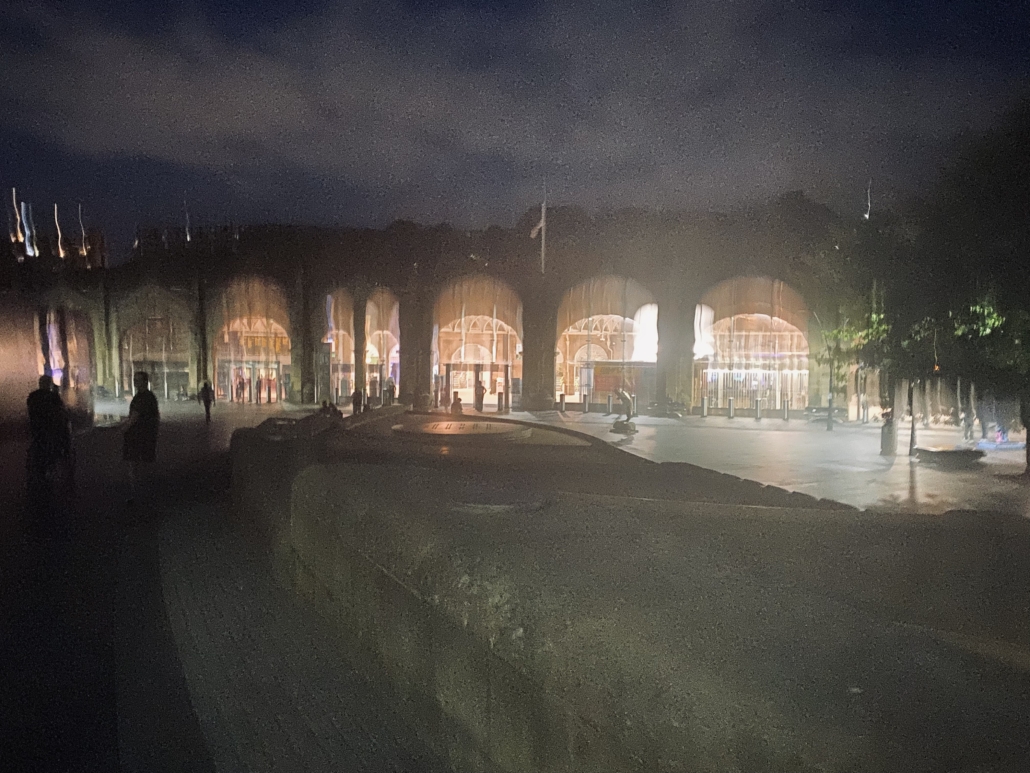
Perhaps it’s not surprising I had a teary moment in the cool night air on the way to the station afterwards.
(On the topic of vulnerability, if you don’t know the work of the amazing Brené Brown, read/watch all of it, now.)
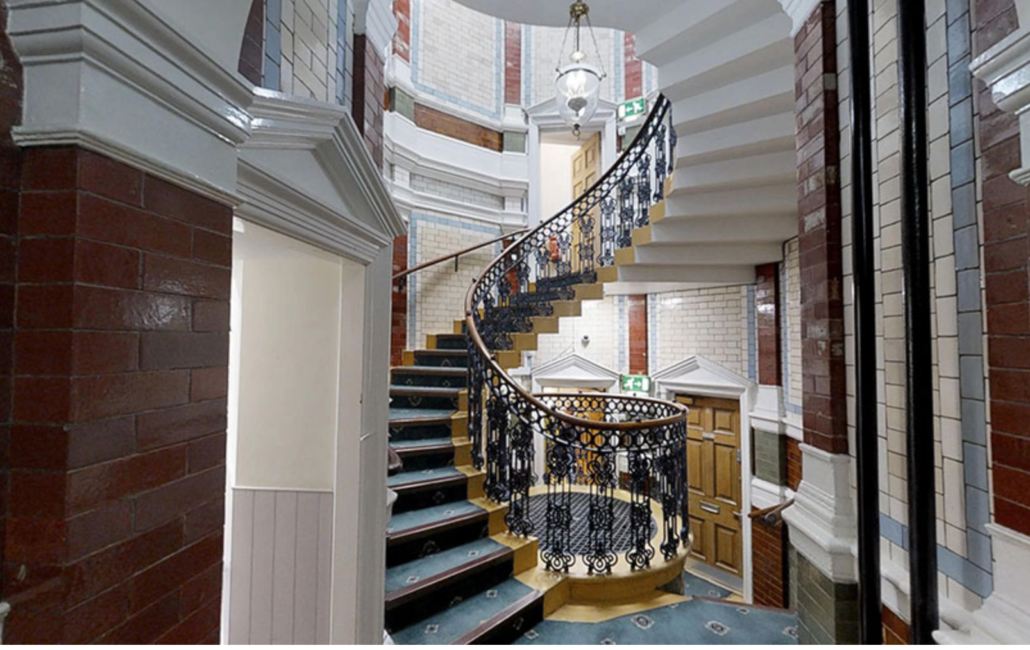
According to ticket sales and observations, some people came to just one concert, a large proportion came to two, and a handful came to all four. Because of the covid protocols, there wasn’t much chance to talk to audience members after the performances, though I had a lovely conversation with a couple who are currently on a mission to visit every county town in the country – we compared notes! But between the third and fourth concerts we migrated up to the Channing Hall – a Victorian addition to the building, that was built for educational purposes, but somehow has a feel of swimming baths about it, with its high ceiling and magnificent tiling – and here there was a Q&A session with the audience, led by Radio 3 presenter and Music in the Round staffer, Tom McKinney. This was a great chance to share a bit more with the audience about the project – how I dreamt it up, how it’s going so far, why I’m supporting the charities that I’m supporting. There were some really interesting questions and observations, and it was particularly lovely to connect with the people who’d been there all day. It’s quite a journey, hearing all of this music in one day. We talked about the challenges of keeping this music fresh (not a problem yet – I’m just enjoying the fact it’s almost at a stage where I can start to imagine that maybe one day it might get easier! But constantly refreshing it will be a challenge later in the project). We talked about the role of listening to recordings in the preparation process (something I did earlier on but am actively avoiding for a while now as my own ideas change and settle). We talked candidly about the logistical/administrative demands of creating a project like this, and how different it is actually getting on and doing it compared to dreaming it up as a hypothetical during lockdown, at which point endless time is available! We talked about the privilege of spending a year living so closely with this music, and the fact I think this will be a year I look back on in a very particular way.
A final thought. Outside the chapel was a huge fluorescent sign: ‘A faith that hasn’t been tested can’t be trusted.’ I’m no theologian but it’s widely accepted that Bach held a deep, personal faith. But this music makes me think he was constantly testing, questioning, searching: the long, long fugues in particular really feel that they’re grappling with vast questions (Book 1 A minor, Book 1 B minor, Book 2 F sharp minor, both books D sharp minor…). One of the stage directors I most love working with, Joe Austin, often talks about characters investigating things – feelings or thoughts – an idea which I steal often in coaching. It’s much more interesting when someone is trying to work something out, than when they’re presenting a decided state of mind. It’s more real. To me, it feels constantly that this is what Bach is doing through his music. So the sign felt apt.
I have fewer photos from this performance than some others, primarily because I was playing the piano almost non-stop for twelve hours, either performing or rehearsing the next set, so photos didn’t really happen! But the music happened – the event happened. It was great to be here.
- County
South Yorkshire
- Town
Sheffield
- Venue
Sheffield’s Upper Chapel – a Unitarian meeting place, and regular concert venue for Music in the Round. An eighteenth-century building, wide, and with a large gallery.
- Audience size
130 across the day – some for the whole thing, some for part of it.
- Piano
A lovely Steinway C, bought by Music in the Round from the Hamburg factory in 2014.
- Dates
Friday 13th August – the whole 48 across four concerts spread through the day
- Extra events
Led by Tom McKinney, a Q&A session with audience members before the last concert – exploring the project, the charities, the music, and the behind-the-scenes reality!
- Favourite P&F
E major Book 2 – the fugue is so poised and complete. I should probably put this one at the end more often – it’s hard to say anything else after playing this one.
- Amount raised for project charities
TBC